
How AI Is Changing Luxury Home Design
How AI Is Changing Luxury Home Design
How AI Is Changing Luxury Home Design: 7 Trends Shaping the Future of Living
Artificial intelligence is often associated with smart assistants, automated lighting and connected appliances. But these are only the most visible applications of AI in residential spaces. Its more interesting influence could happen much earlier—before a home is built.
AI is beginning to influence how architects explore ideas, personalise spaces and make design decisions. For luxury homes, this could create new possibilities by helping designers analyse more options and create residences that are more thoughtful and aligned with the way people live.
1. AI-Generated Design Concepts: Expanding Creative Possibilities
The early design stage is where the identity of a luxury home begins to take shape. AI-powered design tools could help architects explore multiple possibilities based on site conditions, architectural styles, spatial requirements and environmental factors.
The value is not simply generating more designs. AI can help designers compare alternatives, test ideas and discover possibilities that may not have been considered initially.
For luxury villas, where individuality matters, this could make the creative process more flexible while keeping the final vision in the hands of experienced architects.
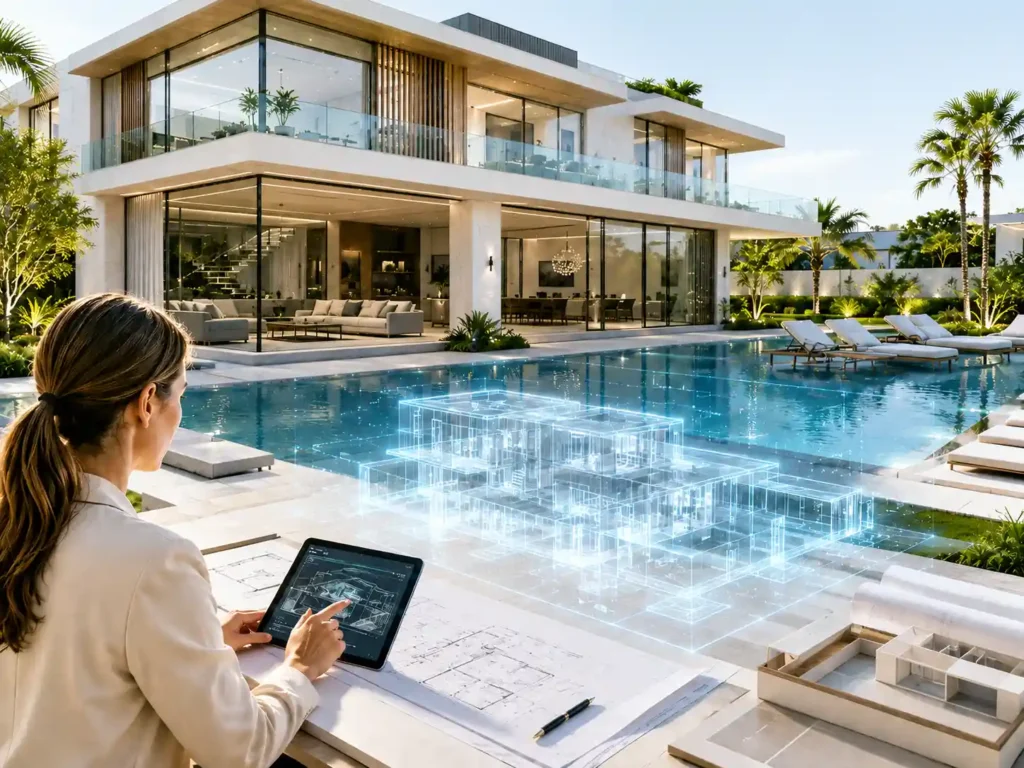
2. Personalised Floor Plans: Designing Around Lifestyles
A truly luxurious home should reflect the lifestyle of its residents, not simply offer a collection of large rooms. AI could help designers analyse individual routines and preferences when developing floor plans.
Someone who regularly entertains guests may need stronger connections between the kitchen, dining areas and outdoor spaces. Another homeowner may prioritise private workspaces, wellness areas or family zones.
Instead of relying primarily on conventional layouts, AI could help create spaces around how people actually live. This could make luxury villa design more personal, functional and adaptable.
3. AI and Biophilic Design: Creating Better Connections With Nature
Natural light, greenery, water and outdoor spaces are becoming increasingly important in luxury home design. These elements can contribute to both the visual experience of a property and the wellbeing of its residents.
AI could make biophilic design more precise by analysing factors such as sunlight, views, climate conditions and landscape opportunities. This could influence decisions about window placement, building orientation, gardens and indoor-outdoor connections.
For luxury villas, the result could be homes where nature is integrated into the architecture rather than added as a decorative feature.
4. Digital Twins: Understanding a Home Before It Is Built
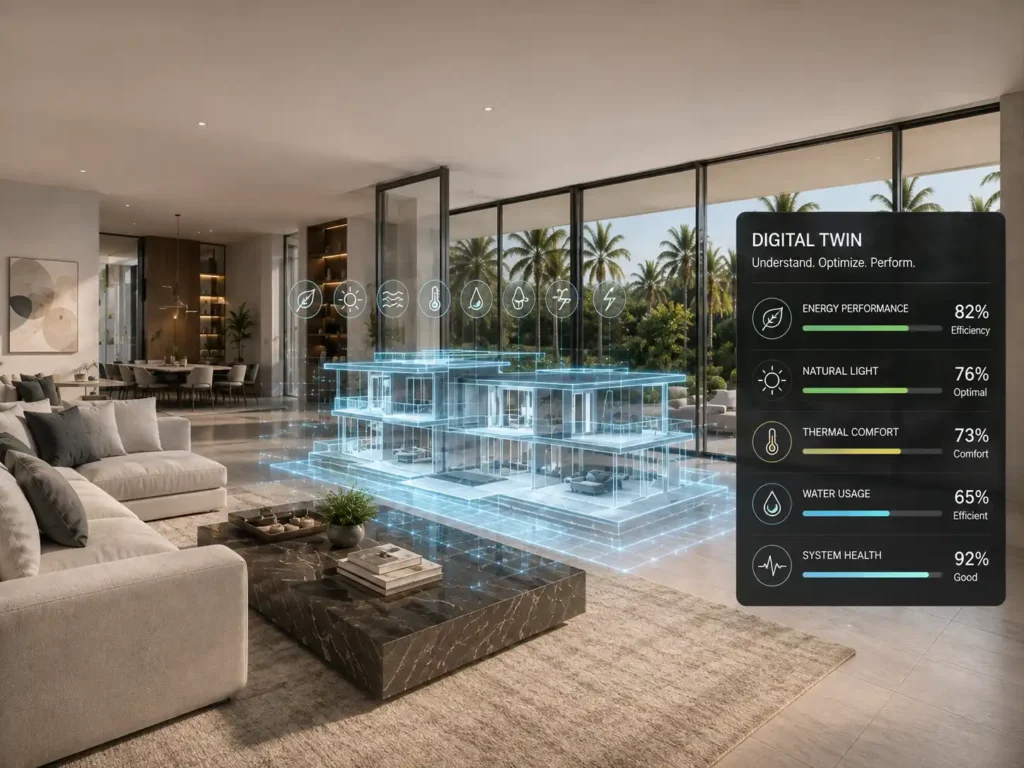
A digital twin is a virtual representation of a physical property. It could become an important tool in the future of luxury residential design.
Before construction, digital models could help designers simulate factors such as energy consumption, lighting, temperature and building-system performance. This could allow potential issues to be identified while changes are still relatively easy to make.
The benefits could continue after completion. A digital twin could support property management by monitoring building systems and helping identify maintenance requirements. For high-value luxury properties, this could shift maintenance from simply fixing problems to anticipating them.
5. AI-Powered Material Selection: Smarter Design Decisions
Materials are central to luxury home design. Stone, timber, metal, glass and other finishes influence the appearance, atmosphere and long-term performance of a property.
AI could help designers compare materials across several factors, including aesthetics, durability, maintenance, climate suitability and sustainability.
Instead of evaluating these considerations separately, designers could use AI to assess them together and identify materials that meet both visual and practical requirements. For high-end villas, this could help ensure that beautiful design decisions also perform well over time.
6. Predictive Smart Homes: Moving Beyond Automation
Smart home technology already allows residents to control lighting, temperature, security and entertainment systems.
The next evolution could be predictive homes. Rather than simply responding to commands, AI-powered systems could learn patterns and anticipate certain needs. Lighting and temperature could adjust according to established routines, while different areas of a property could respond to how they are being used.
The distinction is simple: a smart home responds when instructed; a predictive home learns from behaviour. For luxury homeowners, this could create a more seamless experience where technology works quietly in the background.
7. AI and Timeless Design: Balancing Innovation With Character
As AI becomes more involved in architecture and interiors, there is an important question: will it create more distinctive homes or make luxury properties look increasingly similar?
AI can generate concepts and identify design patterns, but timeless architecture depends on creativity, craftsmanship, proportion and a strong connection with its surroundings.
The role of architects and designers will therefore remain essential. They can use AI to explore possibilities while deciding which ideas have genuine character and lasting value. The goal should not be to make a home look technologically advanced. It should be to use technology to make the design more considered.
What AI Could Mean for Luxury Home Design
The influence of AI on luxury homes could extend far beyond smart appliances. It could become part of the design process itself—helping architects explore concepts, personalise layouts, integrate natural elements, select materials and understand how a property may perform over time.
For homeowners, this could mean residences that are better aligned with their lifestyles and more responsive to their needs. For designers, AI could provide a new layer of information and experimentation without replacing creativity or architectural judgement.
Conclusion: Designing Smarter, Living Better
AI could significantly influence the future of luxury home design, but its greatest contribution may not be the technology that homeowners see. It could be the intelligence behind the decisions made before a villa is built.
From personalised layouts and predictive systems to digital twins and smarter material choices, AI could help create homes that are more thoughtful, efficient and individual.
The future of luxury living is unlikely to be defined by how much technology a home contains. It will be defined by how intelligently technology is used to create spaces that feel personal, timeless and designed around the people who live in them.
Related Blog Posts





CONTACT US
LET'S CONNECT!
Ready to elevate your living or investment experience? Contact us today to turn your vision into reality.